News
MIT News – 3 Questions Interview (June 2026)
June 29, 2026
3 Questions: Beyond data-driven aesthetics
In a new Keller Gallery exhibition, Alexandros Haridis SM ’17, PhD ’22 traces centuries of ideas about aesthetic judgment and explores how design can make complex computational systems visible.
School of Architecture and Planning
Featured on MIT News, on June 29, 2026.
Excerpt
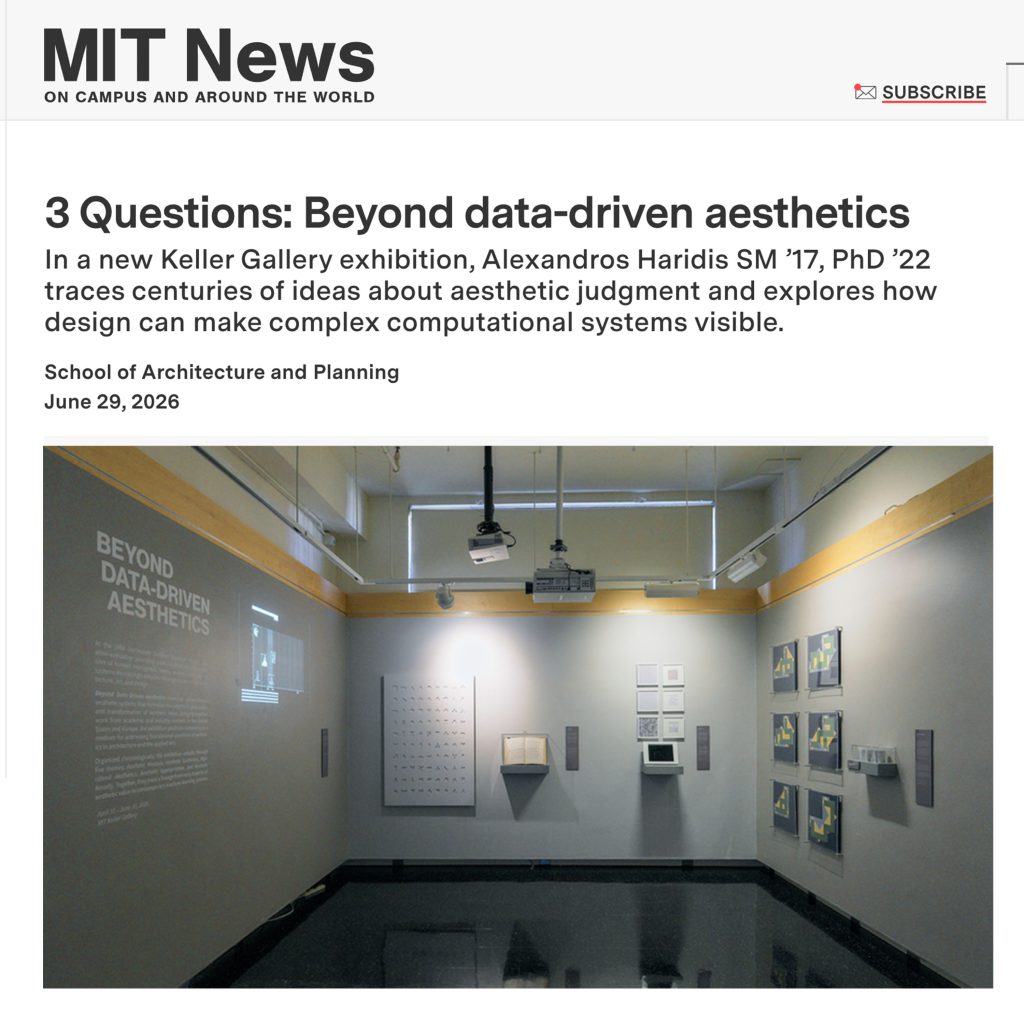
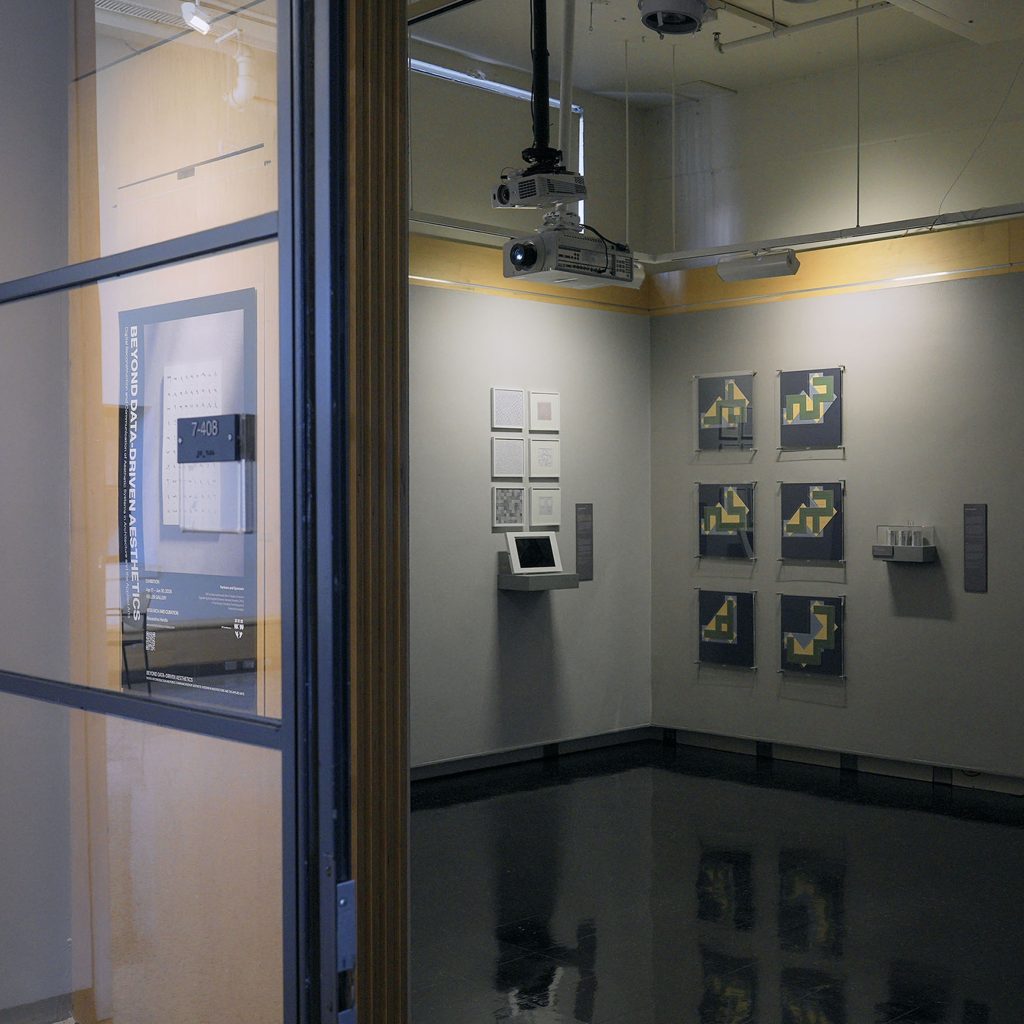
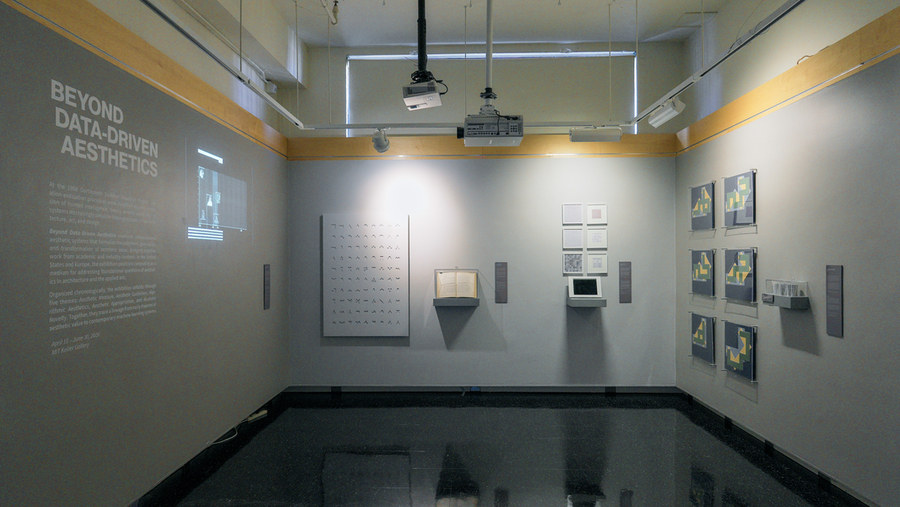
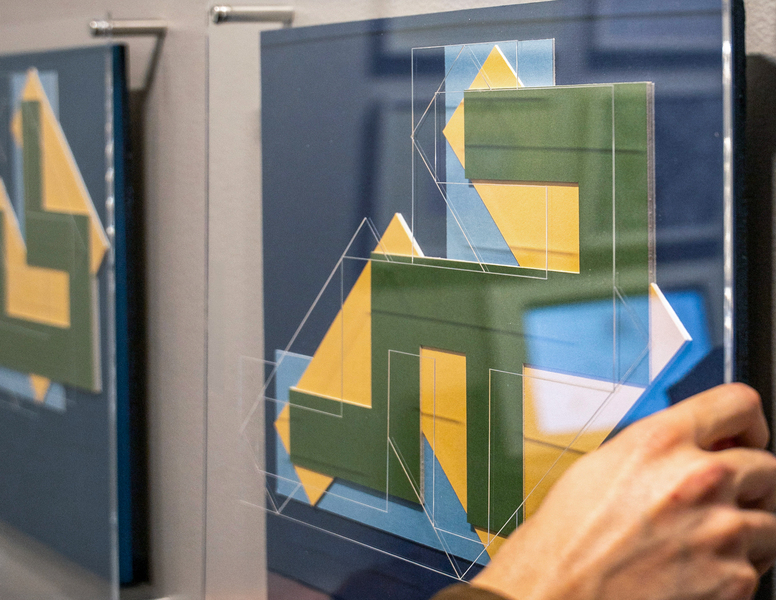
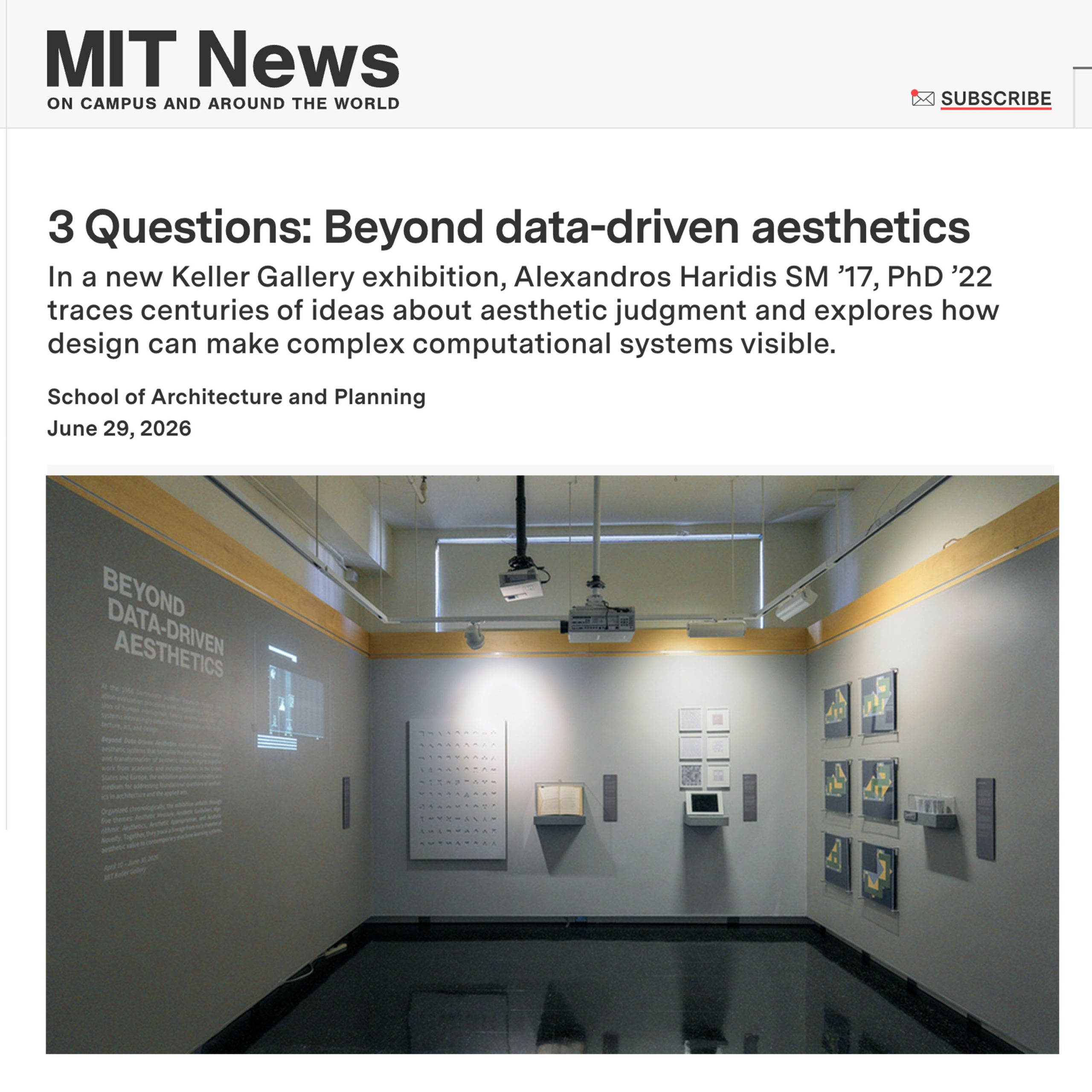
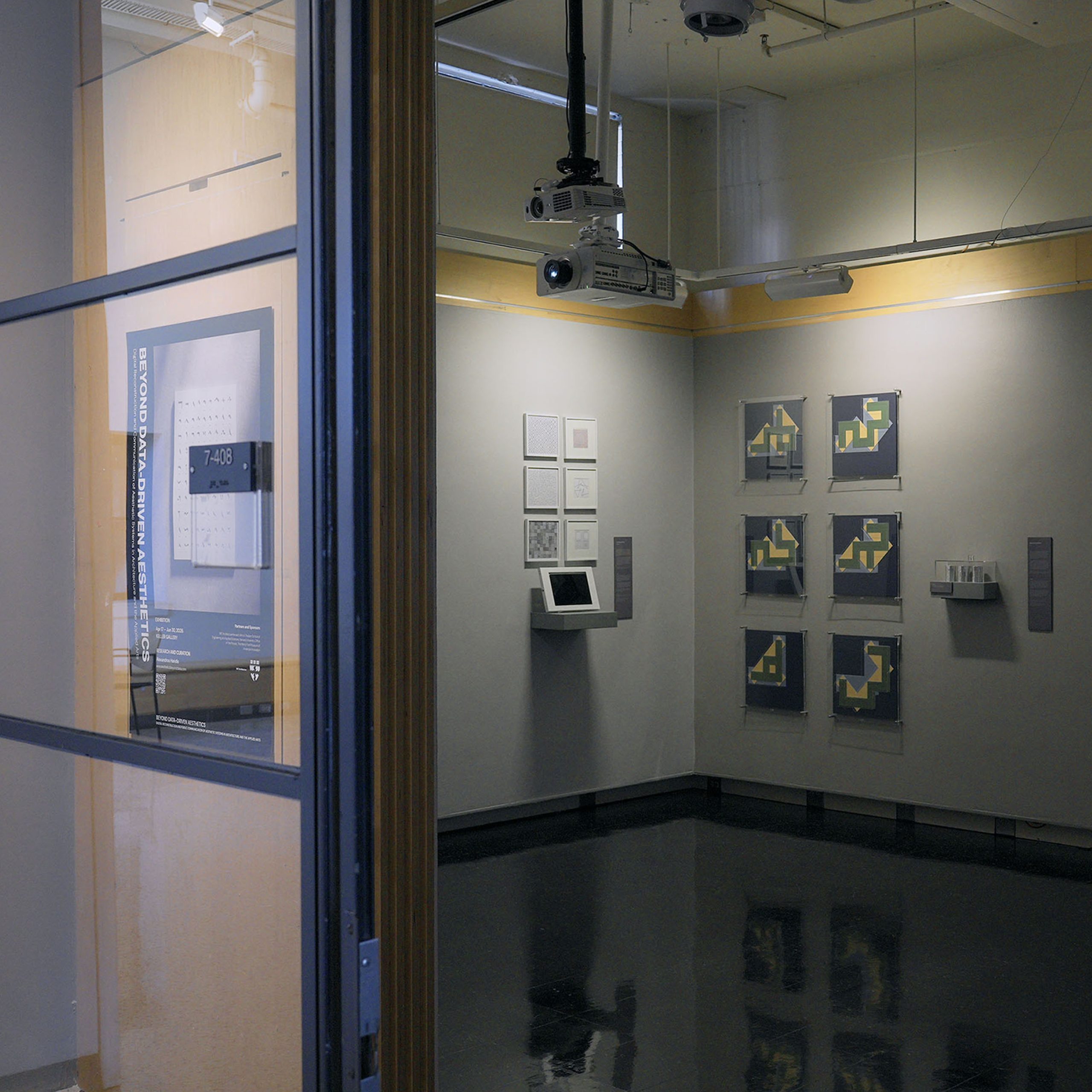
Beyond Data-Driven Aesthetics, by MIT Architecture alumnus and researcher Alexandros Haridis, on view at the MIT Keller Gallery through June 30, examines 20th- and 21st-century efforts to transform computing into a medium for creative production and aesthetic judgment in architecture and the applied arts. Drawing on philosophy, mathematics, computer science, and design computation, the exhibition translates algorithms, theories, and machine-learning systems into physical installations and interactive visualizations.
Q: What inspired “Beyond Data-Driven Aesthetics,” and what questions does it explore?
A: The conceptual origins of “Beyond Data-Driven Aesthetics” emerged from three intersecting lines of research.
First, while completing my PhD in design and computation in the MIT Department of Architecture around 2022, I observed in real time how advances in data-driven machine learning — systems such as ChatGPT and Stable Diffusion — were rapidly entering public discussions about creativity, aesthetic judgment, design, and even high-profile art auctions.
At the same time, my own research was already focused on aesthetic judgment and evaluation, and it became increasingly clear to me that many of the questions presented publicly as “new” in relation to AI actually have a much longer history across the 20th century. For example, in the 1956 Dartmouth Summer Research Project, a foundational event for the field of AI, creation and evaluation processes were identified as one of seven key dimensions of human intelligence that future AI research should address.
Second, the exhibition was influenced by research in design computation and shape grammars that investigates relationships between human insight and computation through rule-based methods, rather than purely data-driven learning. More recent interpretative studies of aesthetic theories — drawing from figures such as Samuel Taylor Coleridge, Oscar Wilde, and even John von Neumann — have been especially important to me. These studies examine whether theories of aesthetic value and comparison articulated in philosophical and literary texts may reveal possibilities or limitations in contemporary models of digital computation and AI in architecture and design.
Finally, the exhibition was motivated by the use of design, fabrication, and data visualization as methods for interpreting mathematical concepts, algorithms, and “black box” machine-learning systems. Across disciplines, researchers increasingly use reconstruction and visualization techniques to make computational systems more tangible and interpretable — from neural network visualization in computer science to software reconstruction and digital fabrication in architecture and curatorial practice.