
Teaching
ES138 Computing Design & Values – Harvard University
May 7, 2024
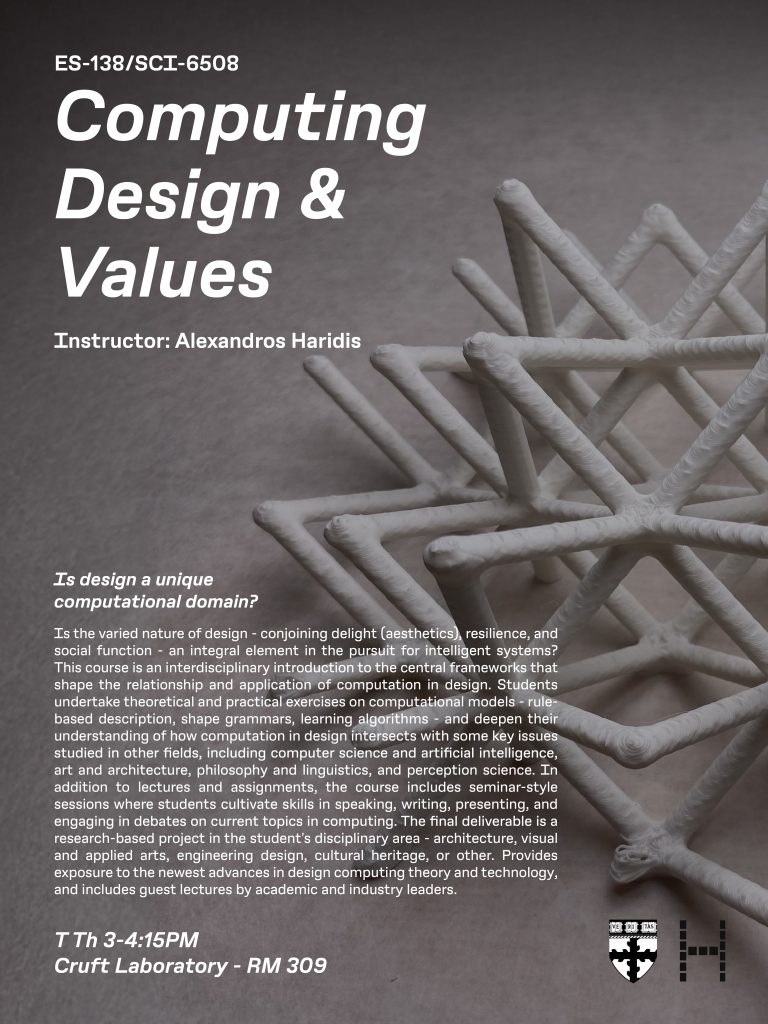
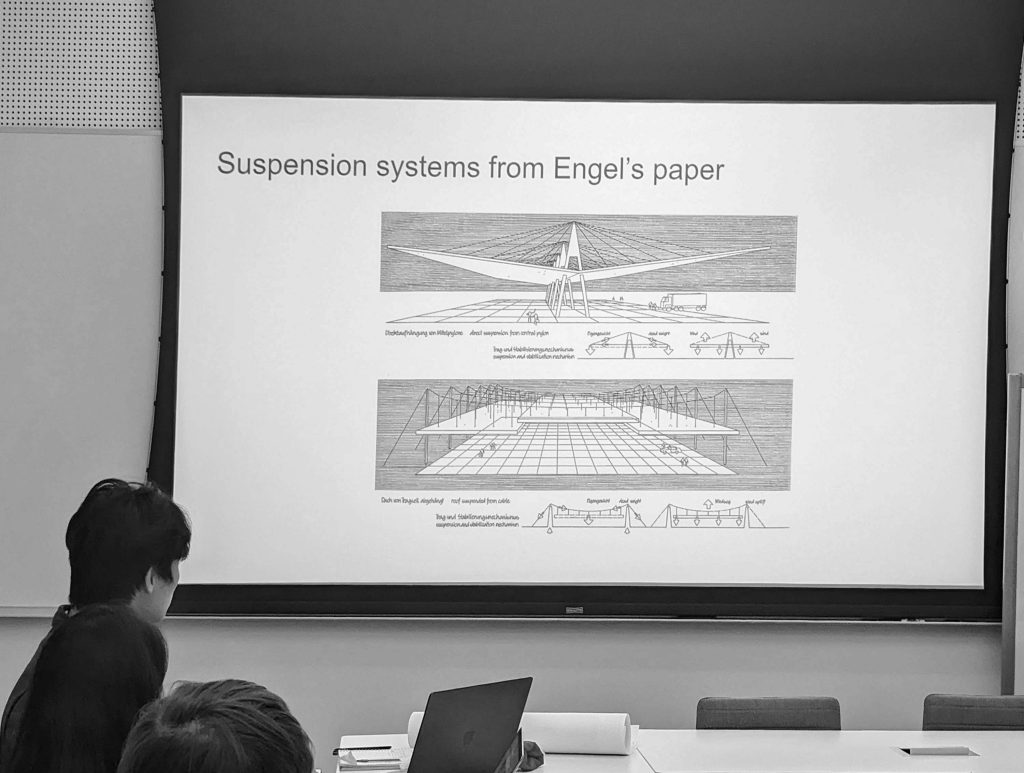
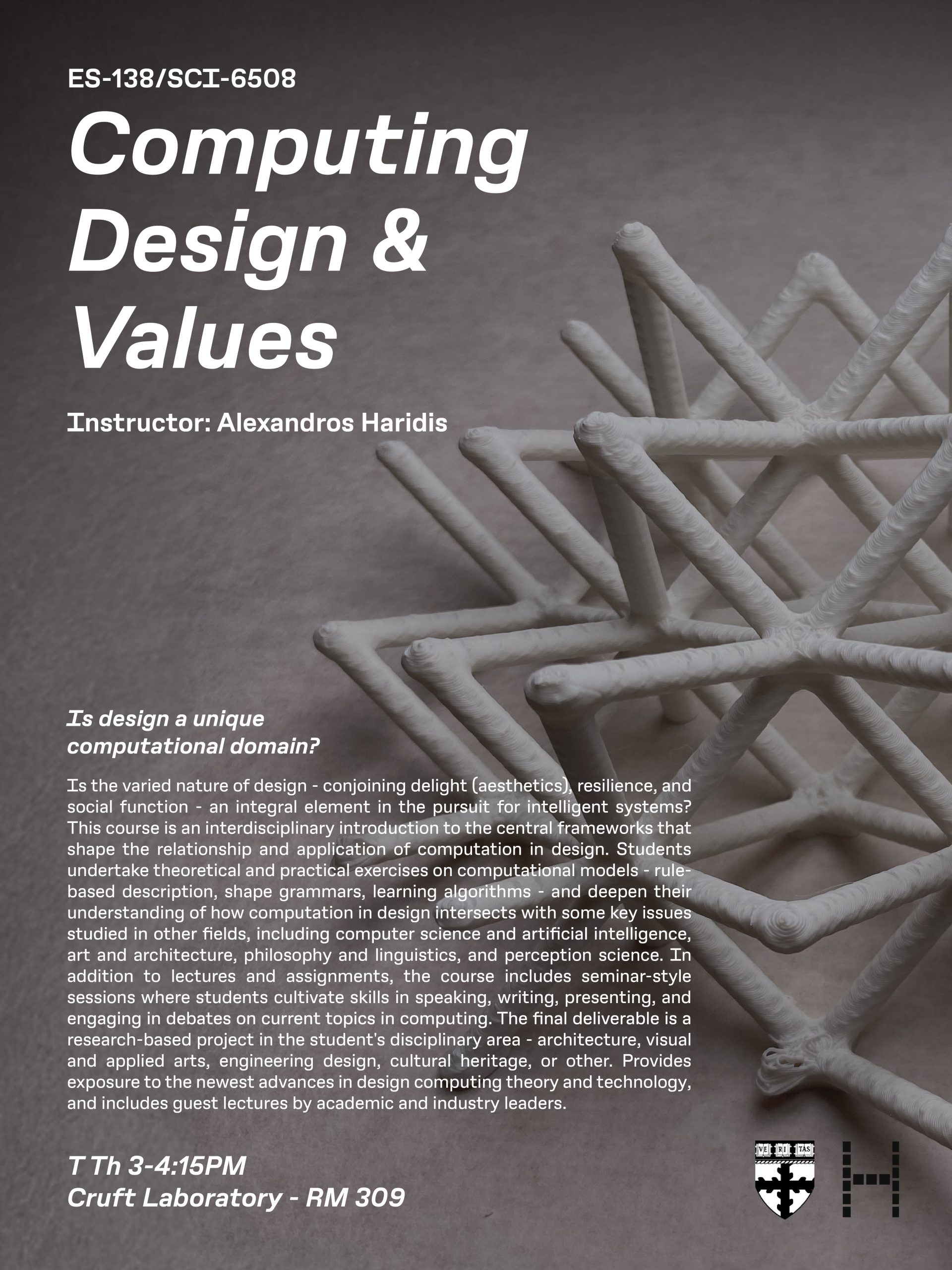
Is design a unique computational domain? Can computing, whether with rules or data, assimilate design values? Is the varied nature of design integral in the pursuit of intelligent machines? A new research course I designed, ES138 Computing, Design, and Values at Harvard University, explores answers to these questions. The course is cross-listed at the John A. Paulson School of Engineering and Applied Sciences jointly with the Department of Architecture at the Graduate School of Design.
Course Description
An interdisciplinary introduction to the central frameworks that shape the relationship and application of computation in design. Teaching “design” to every possible discipline engaged with designing physical (as opposed to abstract) things is unattainable due to varying idiosyncrasies. Instead, here we opt for a “common ground” set of ideas, methods, and tools around computation that can be transferable to individual disciplines and their problem areas. The emphasis is on design issues requiring visual-spatial reasoning, including the analysis and generation of designs for lived spaces, beautiful and functional objects, buildings and urban environments, art-historical objects, cultural heritage, physical or biological structures.
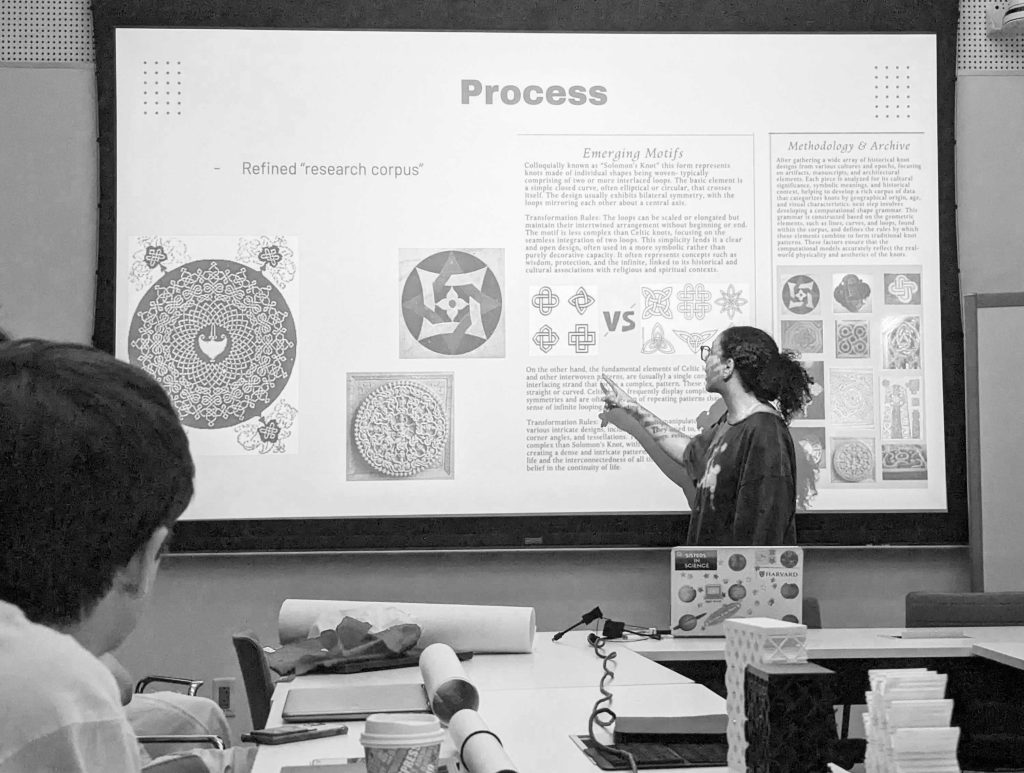
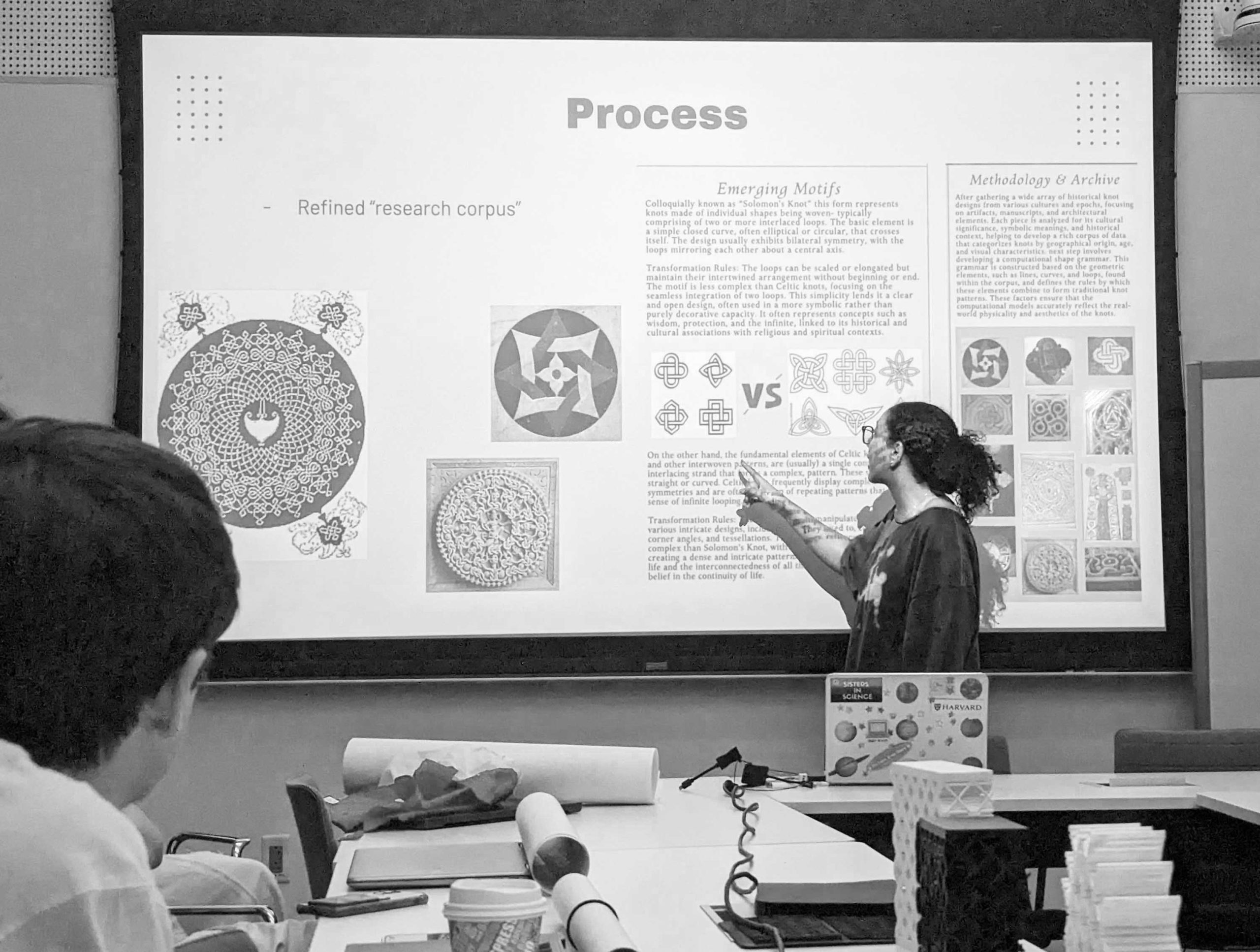
Lectures expose students to rule-based and data-driven traditions of design computing research, scholarship, and design technology. Students formulate final research projects in a design area of their choosing that reflect the themes of the course. Examples include final projects in architecture, materials science, robotics, generative art, and cultural heritage.
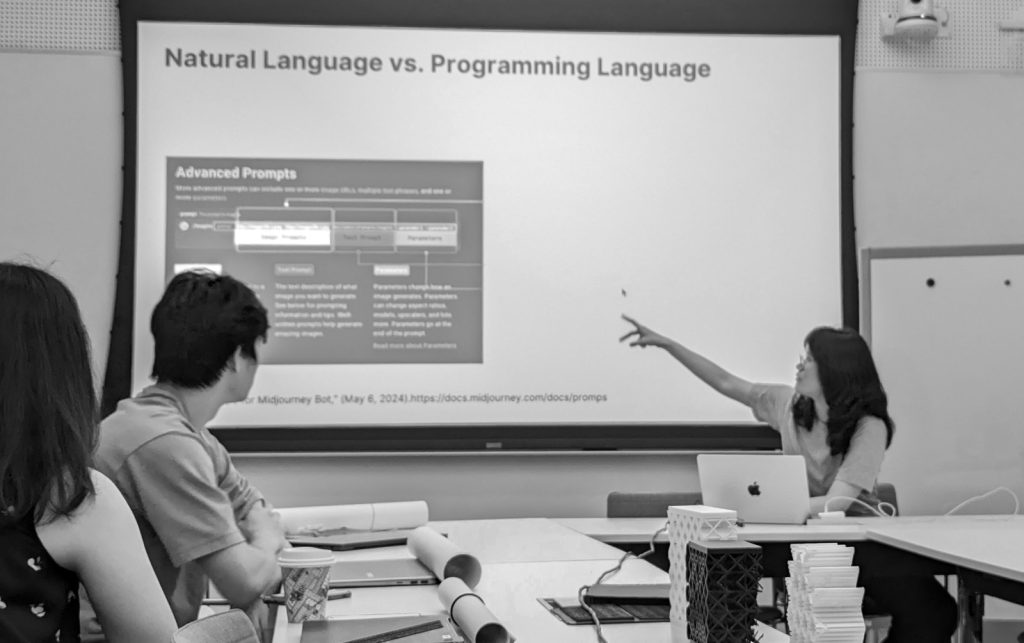
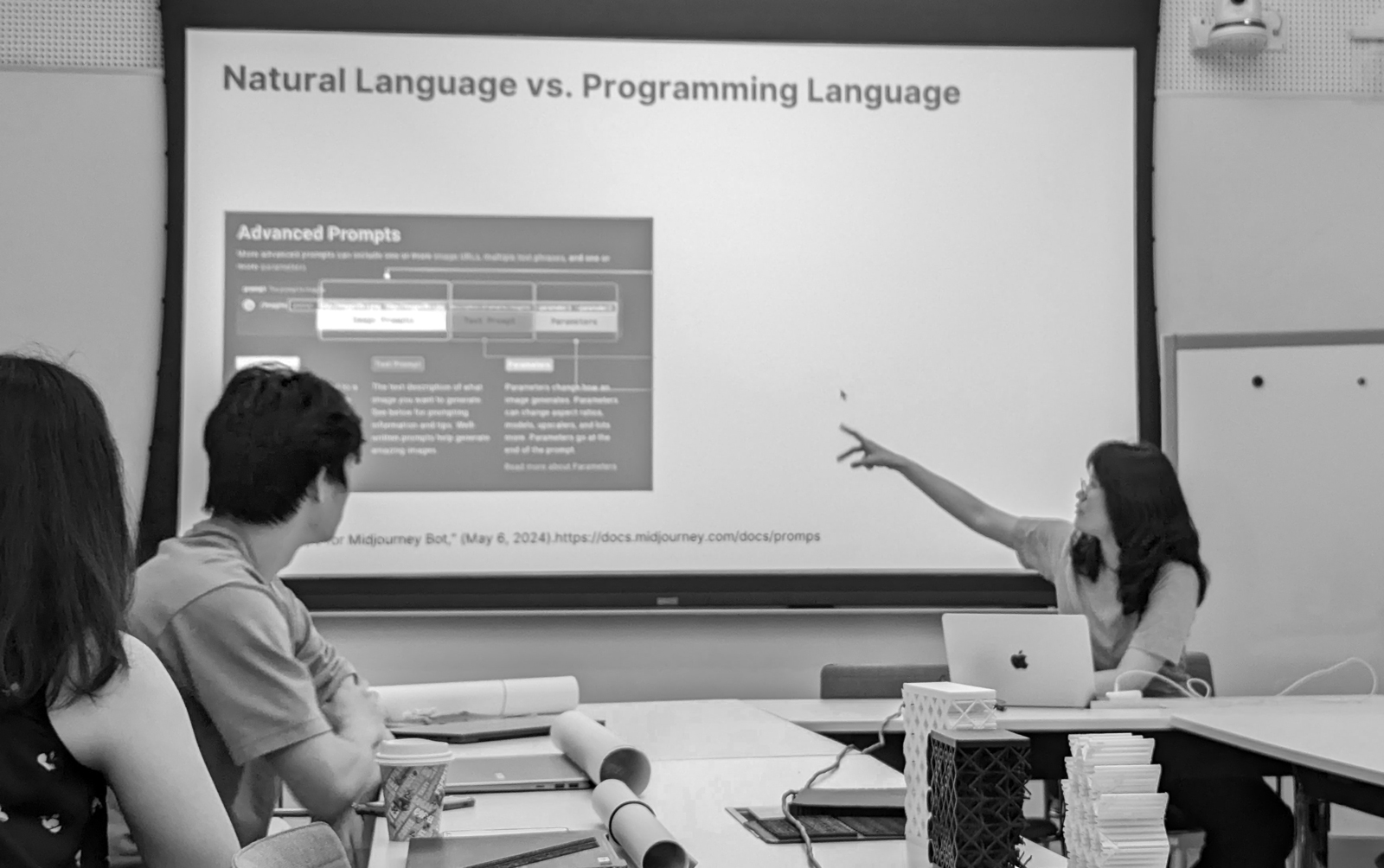
Concurrently, the course provides seminar-style sessions – incorporating close reading of texts – to foster a critical (evaluative) mindset on computing. Discussions focus on how computing assimilates judgments related to aesthetics, usability, performance, and include issues of design authorship, ethics of computing, models of language, perception or learning, and the limits of AI. Readings engage key issues from architecture, art and design, philosophy, mathematics, linguistics, cognitive science, and AI.
The course aims to provide a platform for students to develop original design-related research in computing and to gain experience in oral discourse or in writing on topics not covered in a regular curriculum. As a result, student projects from ES138 frequently result in quality research publications and form a basis for thesis projects.
Press
“The Language of Design: SEAS Class Combines Computation and Design Philosophies.” By M. Goisman, August 23, 2024 (Harvard SEAS Newsletter).
Excerpt: “Last spring, a class at the Harvard John A. Paulson School of Engineering and Applied Sciences (SEAS) aimed to combine computation with traditional design concepts. This broadens the ways architects and designers can approach how they solve design challenges… I was looking for an opportunity to bridge the gap between theoretical knowledge and practical application, ensuring that my values in design were not just conceptual but also tangible and actionable. The course’s emphasis on computational techniques provided the perfect platform to combine these diverse influences, allowing me to put my learning into practice in a meaningful way.”